A climate-aware design co-pilot for courtyards that think, adapt, and respond.
Urban courtyards are overheating, underused, and disconnected from how people actually live. Captain CAT reimagines them as intelligent, social, climate-responsive spaces through conversation, data, and design logic.

Captain CAT
Courtyard Advisory Tool
Courtyards sit at the intersection of climate, community, and daily life, yet they are often designed through static diagrams and late-stage simulations. Captain CAT was developed to shift this moment earlier, transforming vague intentions into spatial logic, climate feedback, and geometry in real time. Acting as a friendly design co-pilot, CAT invites dialogue instead of prescriptions, making climate intelligence accessible during concept design.
Origin Story
CAT demo video
Designers describe needs in natural language: shade, play, water, rest, visibility. CAT parses these into programmatic intents, constraints, and adjacencies instead of fixed forms.
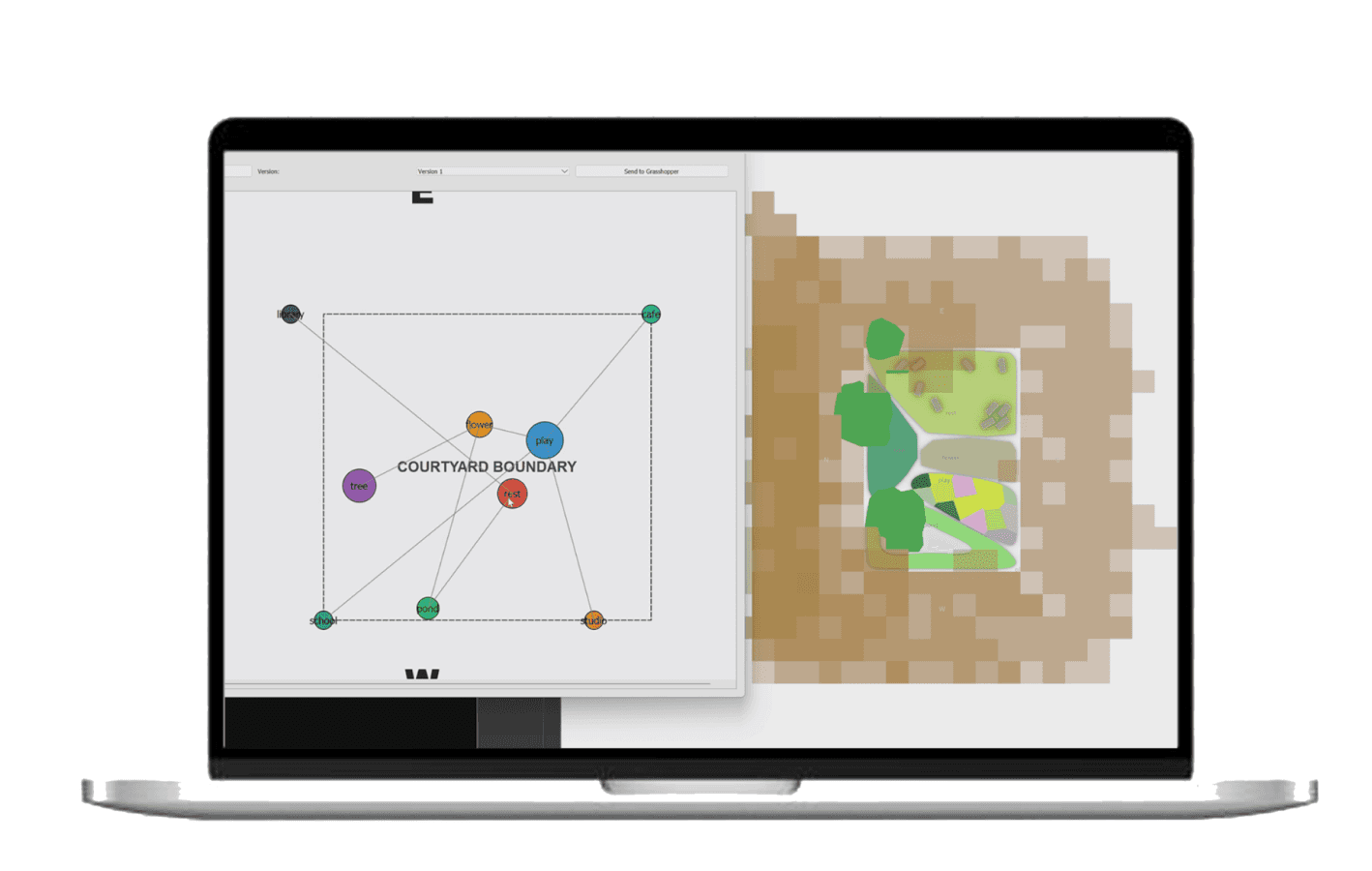
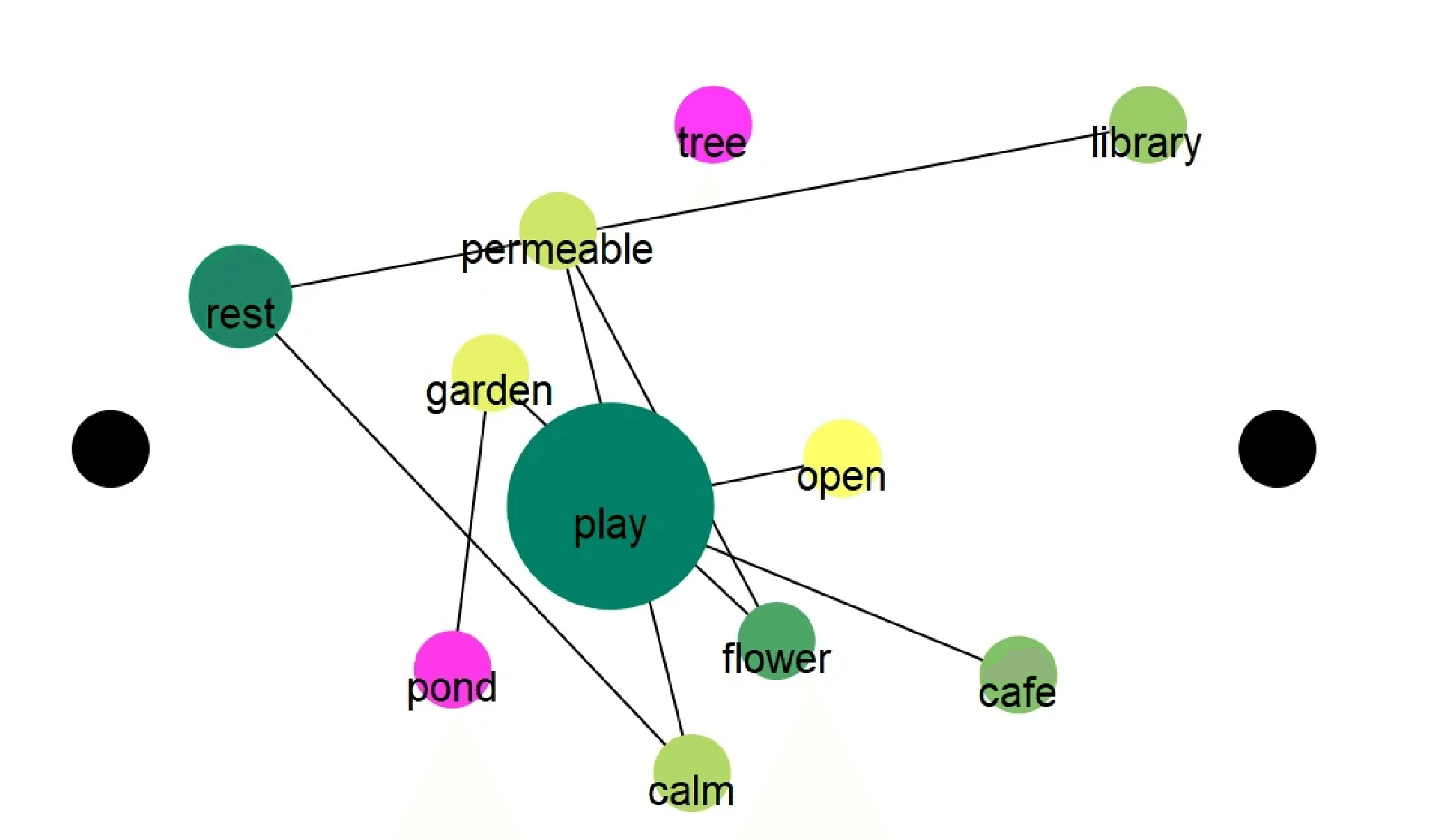
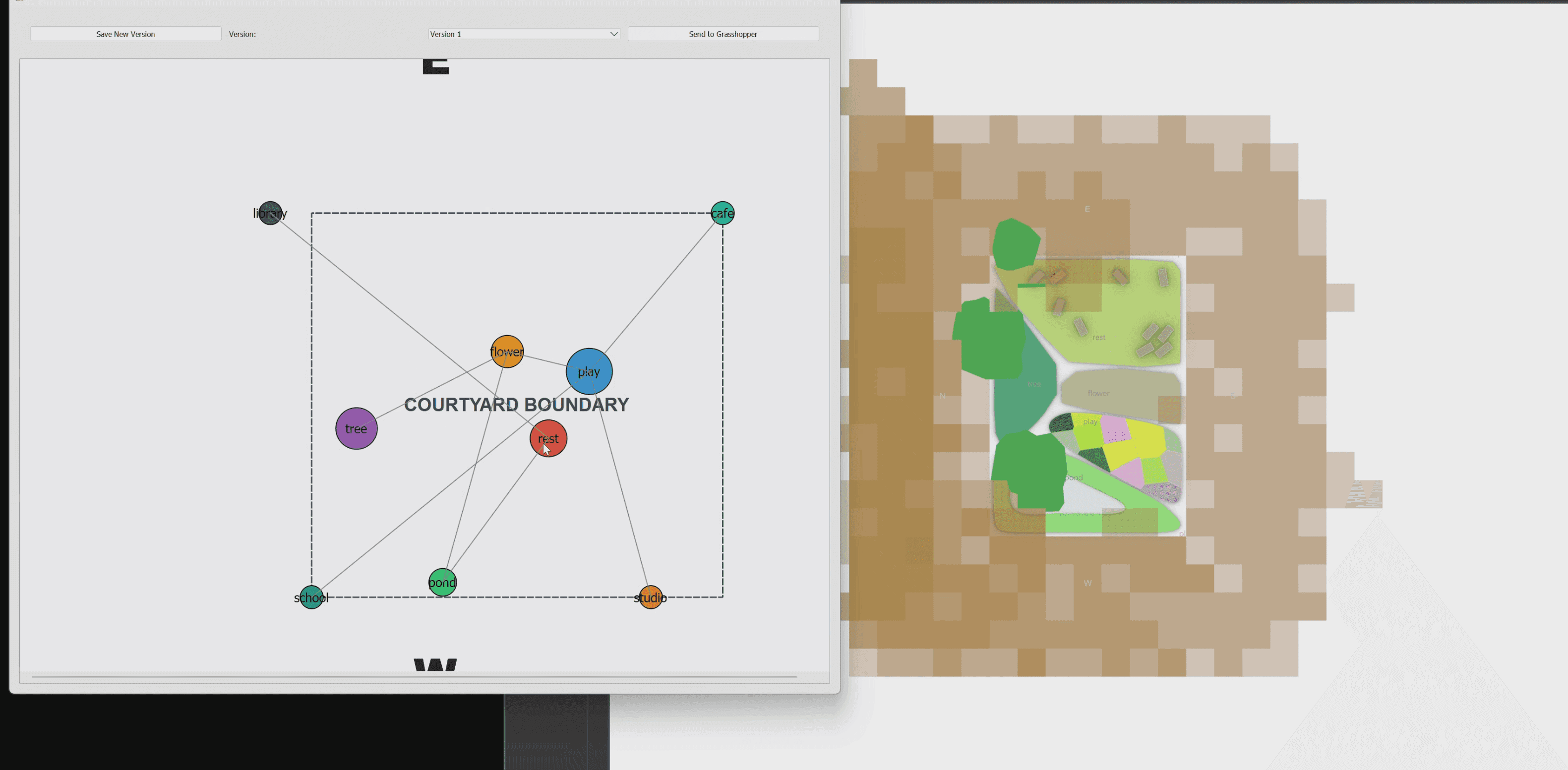
Each courtyard function becomes a node in a custom graph system. Relationships encode proximity, conflict, and synergy. Anchor-driven clustering relaxes the graph across a surface, generating legible spatial distributions rather than arbitrary layouts.
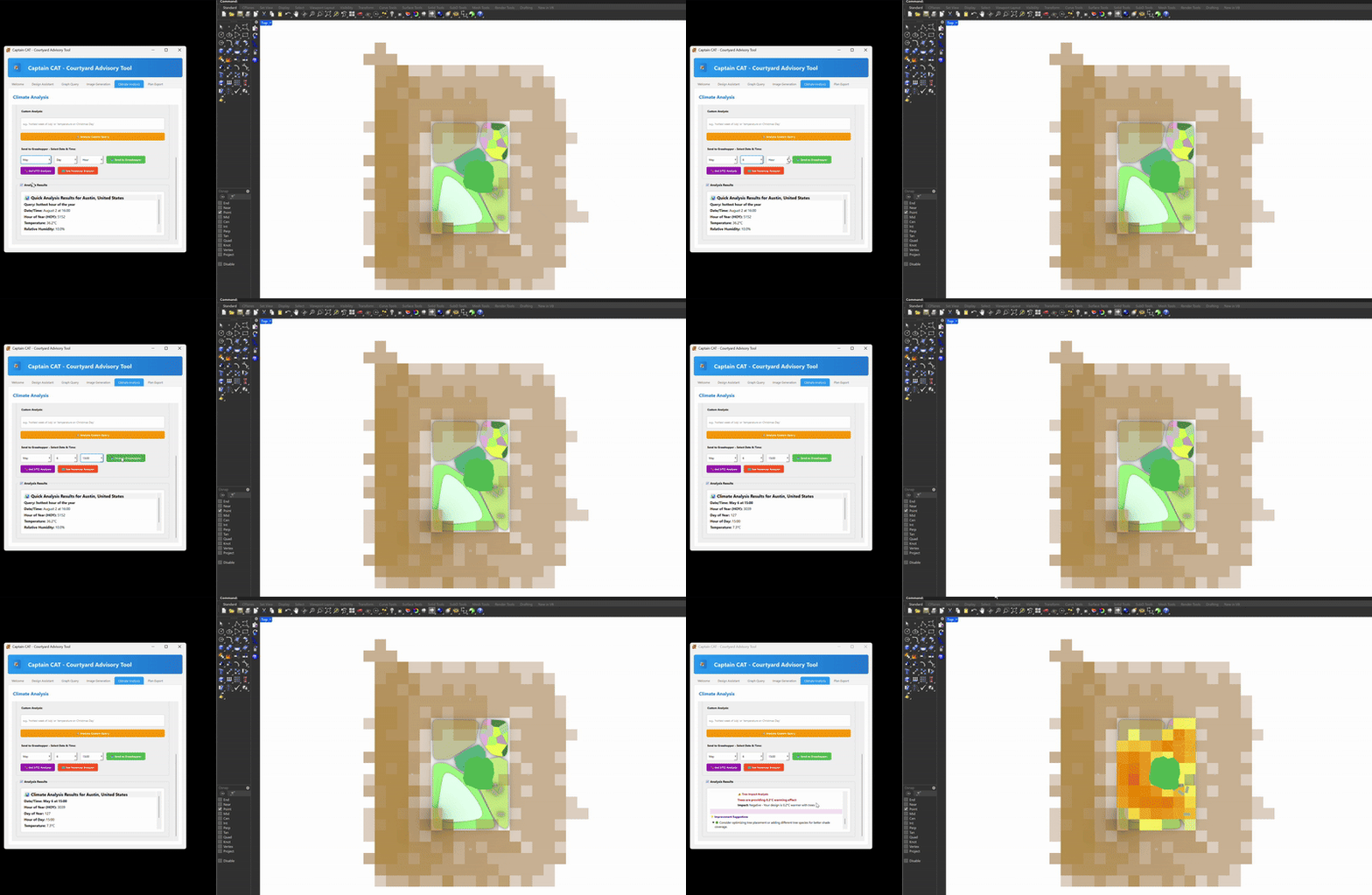
Environmental data enters early. EPW climate files and UTCI analysis inform where people can linger, not just where space exists. Shade, radiation, and comfort are evaluated live as the layout evolves.
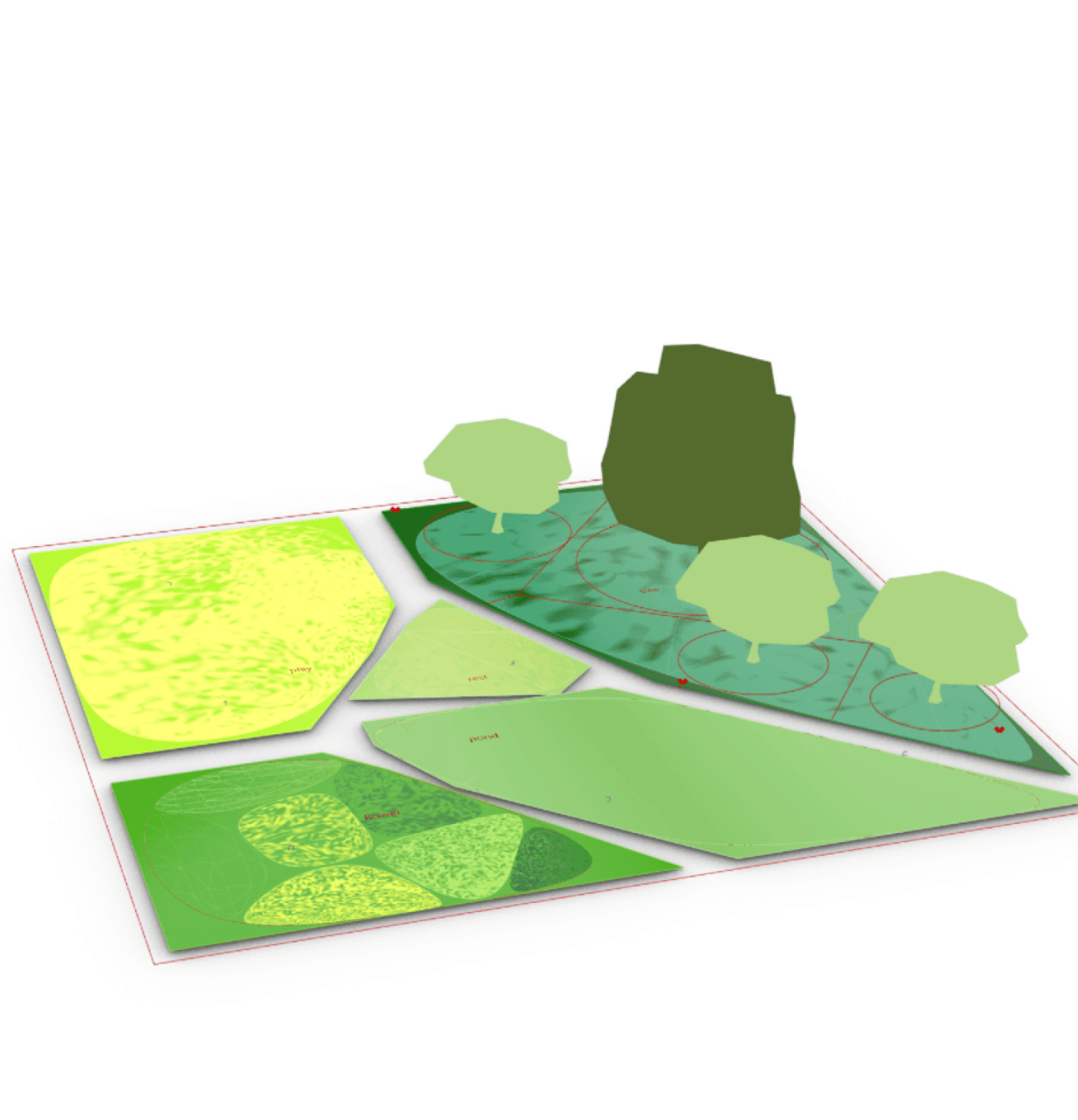
The graph resolves into geometry inside Grasshopper and Rhino. Designers see immediate 3D feedback, while CAT critiques connectivity, clustering quality, and climate performance.
How Does CAT Work?
Conversational Input
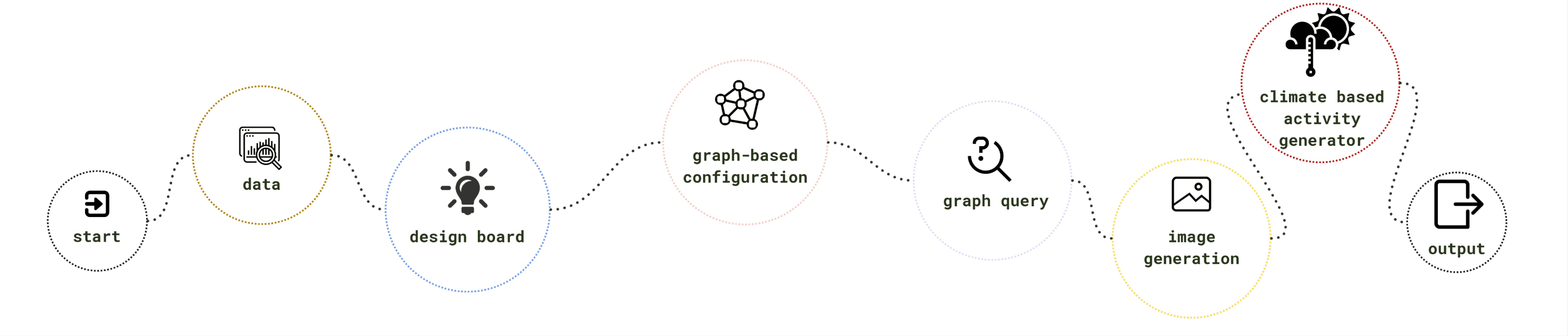
Workflow Diagram
start
data
case studies
design parameters
ML data
climate data
design board
user requirements
graph query
image generation
output
comfort analysis
activity suggestions
climate based activity generator
interactive graph
multiple versions
courtyard division
graph-based configuration
possible geometries
1
Graph Based Learning
2
Climate Intelligence
3
Parametric Translation
4
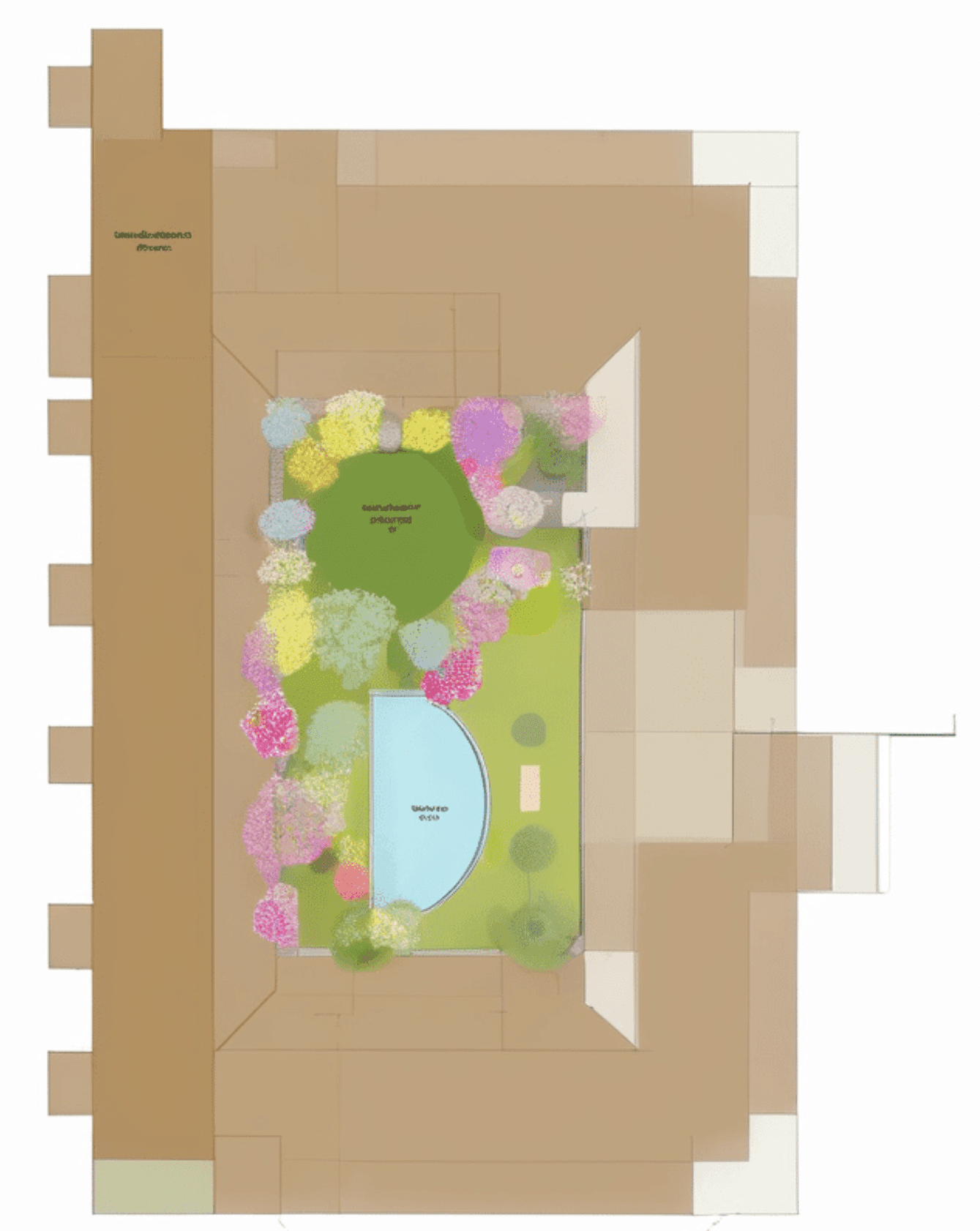
Generative Imagination
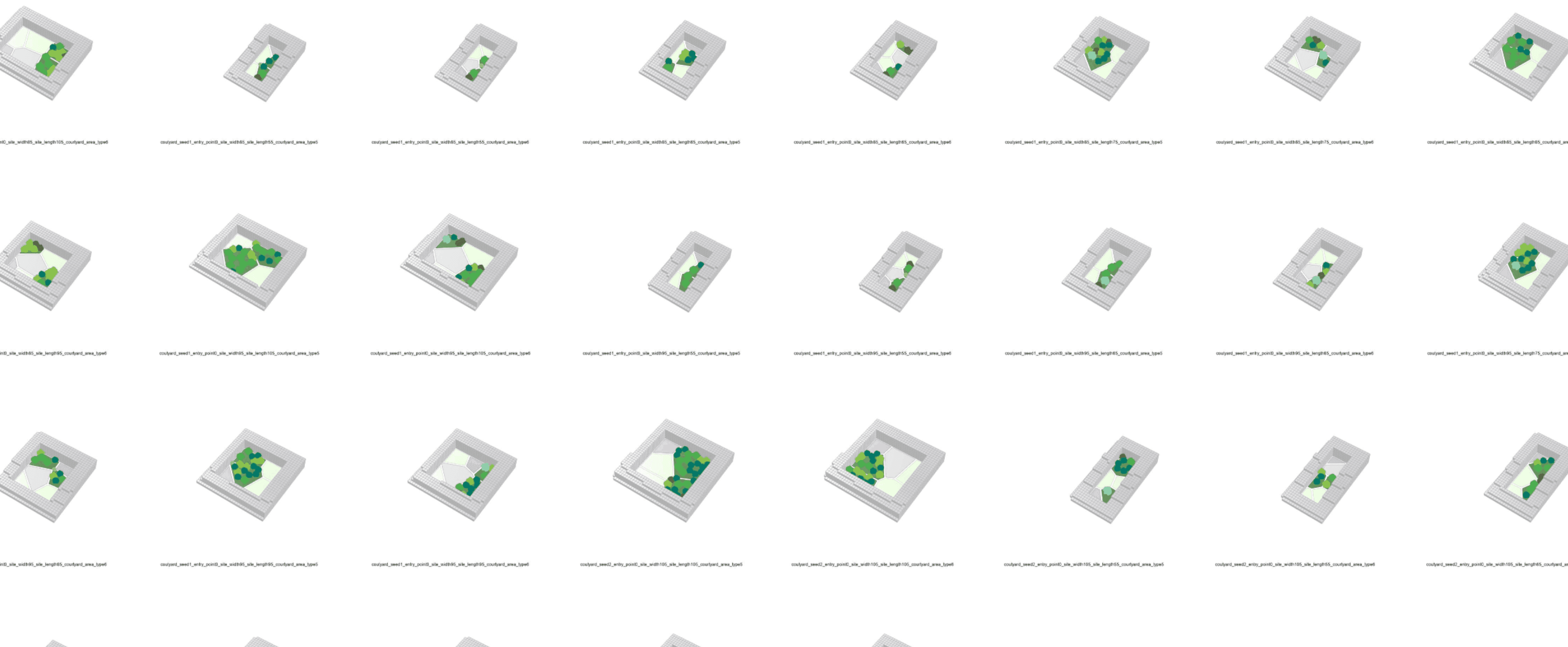
Screenshots are processed through SDXL to generate plans and concept visuals, bridging analysis and storytelling. Each iteration is archived as structured PDFs, CSVs, and JSONs for clients and collaborators.
Graph ML Insights
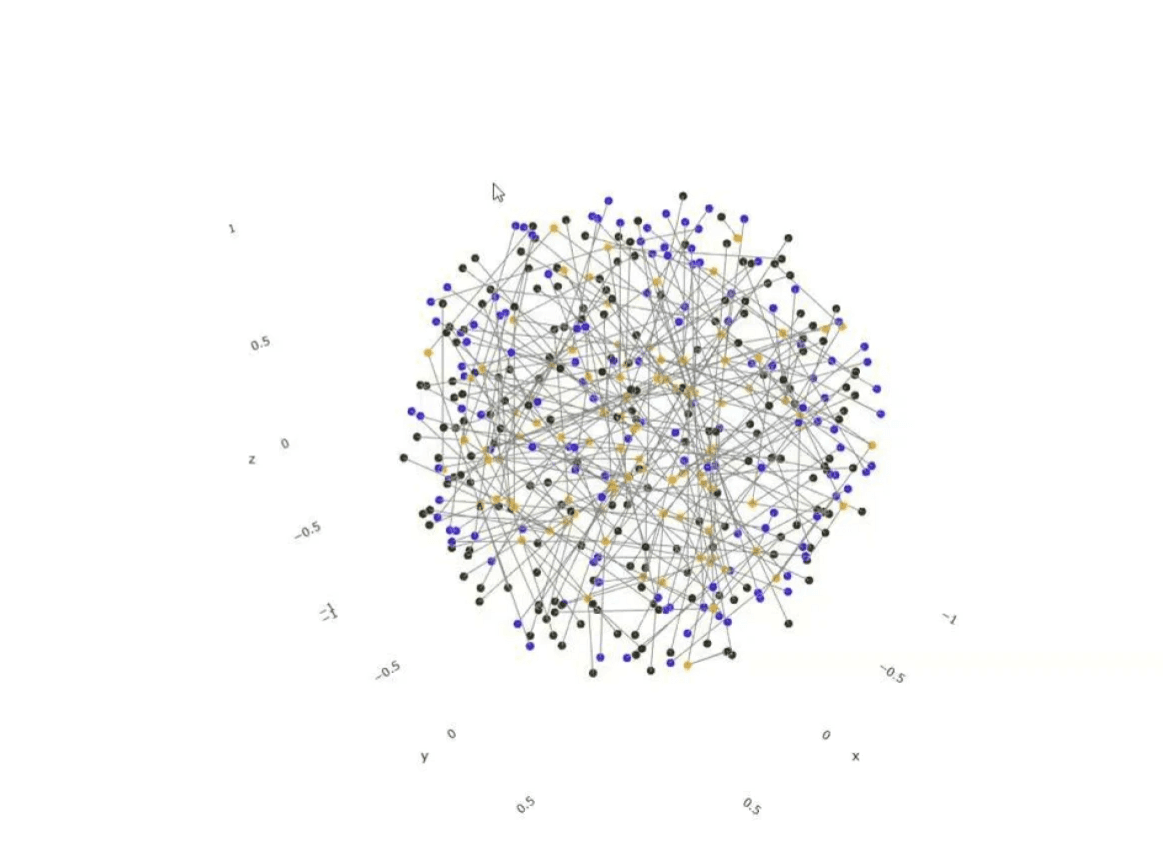
Courtyard and building elements were transformed into a Neo4j graph containing spaces, windows, adjacencies, and environmental metrics. Community detection revealed hidden spatial patterns, informing targeted design improvements.
Captain CAT is a design intelligence layer that closes the loop between intent, environment, and form. By treating courtyards as living systems rather than leftover space, the project demonstrates how AI can augment architectural judgment without replacing it.
This framework scales beyond courtyards to streets, plazas, and adaptive public spaces, pointing toward climate-responsive digital twins that learn alongside designers.
Real-Time Comfort Prediction
Over 5,000 courtyard configurations were generated and simulated using UTCI. A trained Random Forest model predicts thermal comfort instantly inside Grasshopper, replacing slow simulation cycles with immediate feedback.